Signed in as:
filler@godaddy.com
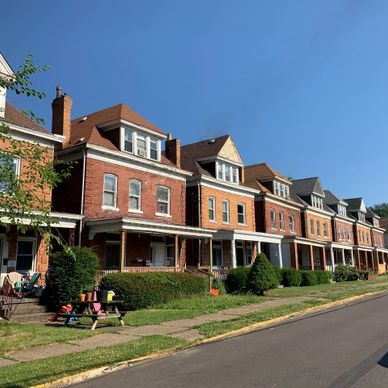
Practical Preservation aids companies in navigating Federal and state regulations pertaining to Section 106 of the National Historic Preservation Act of 1966. By properly identifying, evaluating, and assessing historic resources as well as providing the public an opportunity to comment, projects are more likely to be completed on time and on budget. Our team understands how historic resources intersect with transportation systems, infrastructure improvements, site development, and community planning efforts.
The National Register of Historic Places (NRHP) is an honorary listing of the nation’s most significant historic resources. Listing on the NRHP gives property owners access to economic and preservation incentives (such as historic tax credits and grants) in addition to providing recognition of the resource.

The use of historic rehabilitation tax credits are one of the most effective tools for redeveloping historic properties. The federal program allows for a 20% credit on qualifying capital investments while the state of West Virginia offers a 25% credit to property owners who rehabilitate historic buildings in exchange for preserving a building’s key historic elements. Thirty-seven additional states have tax credit programs as well.

A Historic Structure Report (HSR) is a planning tool that thoroughly documents the history, evolution, materials, and existing conditions of a historic building while placing the resource within its broader historical and physical context. An HSR evaluates character-defining features, existing building conditions, site constraints, circulation patterns, drainage concerns, and long-term preservation needs in order to develop treatment recommendations and guide future rehabilitation or adaptive reuse efforts.

The Secretary of the Interior’s Standards are a list of best practices to use when working with historic buildings. The Standards identify four treatment approaches which provide common sense methods to maintaining or updating a historic building. Practical Preservation works with architects and engineers to ensure that designs and materials will meet the Standards.
Practical Preservation works with communities to create context-sensitive design guidelines that balance historic character with accessibility, infrastructure needs, circulation, redevelopment pressures, and long-term economic sustainability.
To aid in the historic preservation of historic buildings, Practical Preservation can assist in the preparation of historic grant applications. To date, the team has generated over $1.3 million through successful grant funding.

Practical Preservation provides existing conditions analysis, visual documentation, and infrastructure-informed planning support for preservation and redevelopment projects.
Our team can analyze turning radii, approach paths, and vehicle circulation patterns to confirm that site layouts accommodate required vehicle types without impacting historic resources. Our interdisciplinary approach helps communities and project teams understand how historic resources relate to transportation systems, circulation, grading, drainage, accessibility, and future site development.